Microneedling
Stimulate natural collagen production through controlled micro-injuries
What is Microneedling?
Microneedling, also called collagen induction therapy (CIT), is a skin treatment that uses fine needles to create tiny punctures in the skin's surface. According to the British Association of Dermatologists (BAD), these controlled micro-injuries trigger your body's natural wound healing response, stimulating production of collagen and elastin—the proteins responsible for firm, youthful skin. The JCCP classifies professional microneedling as requiring specific competencies and mandates that needle cartridges must be sterile, single-patient use items disposed of in sharps containers.
Who is it for?
Microneedling suits adults over 18 seeking to improve skin texture, reduce scarring, or address early signs of ageing. According to JCCP standards, the treatment works well for most skin types and tones, making it a versatile option compared to some laser treatments. The BAD notes it's particularly effective for indented (atrophic) acne scars but is not recommended for raised (hypertrophic) or keloid scarring.
Common concerns addressed:
- Acne scarring (indented/atrophic scars)
- Fine lines and wrinkles
- Enlarged pores
- Uneven skin texture
- Stretch marks
- Dull, tired-looking skin
How does it work?
According to BAD clinical information, a device fitted with fine sterile needles creates thousands of tiny channels in your skin. This controlled trauma activates your body's healing cascade, increasing blood flow and triggering fibroblasts to produce new collagen and elastin. The JCCP notes that the micro-channels also temporarily enhance absorption of topical serums applied during treatment, though they specify that only products licensed for intradermal use should be applied—standard topical products must be removed before needling.
What to expect
The procedure
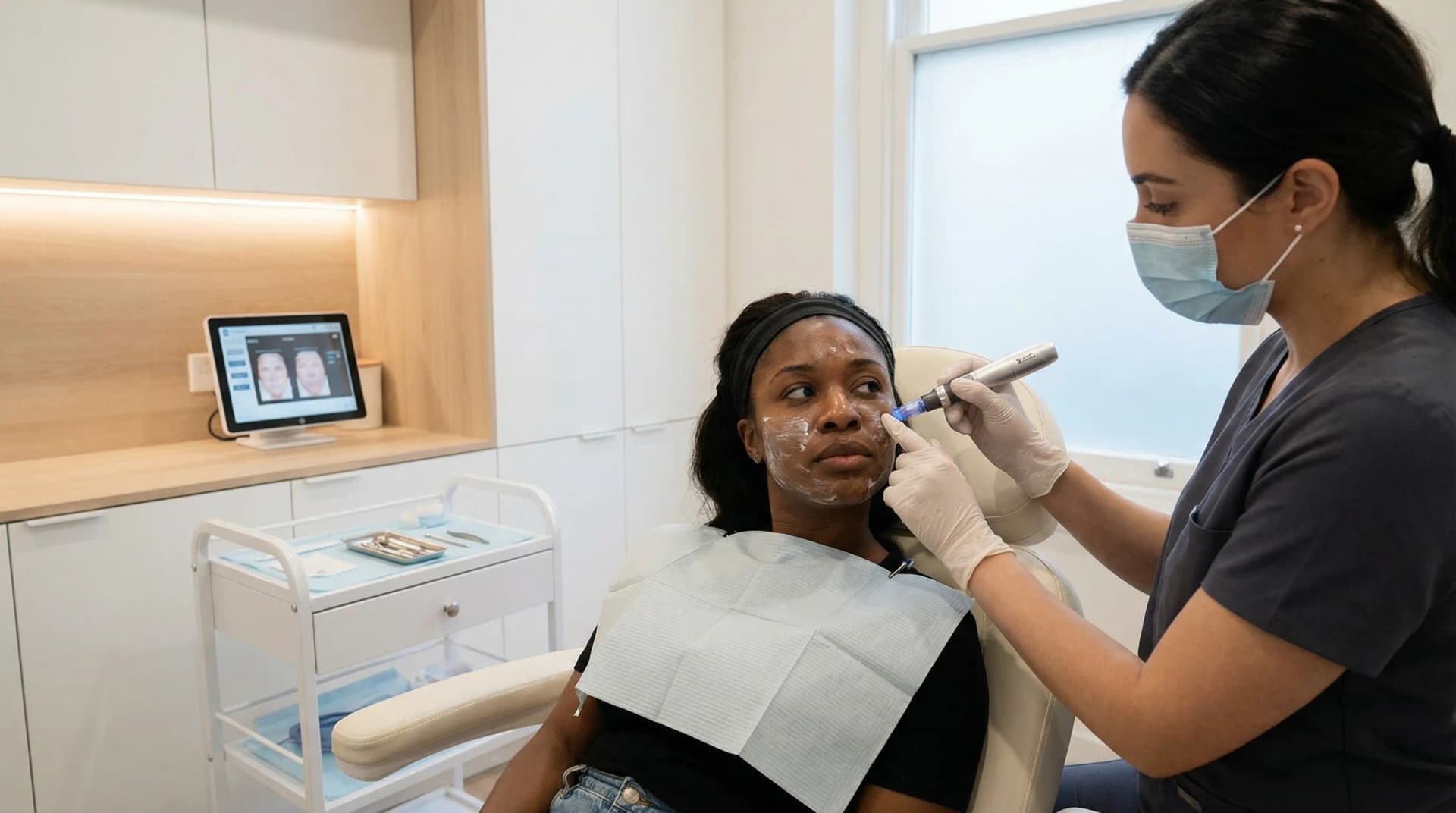
According to JCCP standards, treatment takes approximately 20-45 minutes depending on the area. Topical anaesthetic cream is applied 30-60 minutes beforehand to ensure comfort, then must be completely removed before needling begins. Your practitioner will cleanse your skin with appropriate antiseptic, then pass the microneedling device over the treatment area in a systematic pattern. You'll feel vibration and mild pressure. Serums licensed for injectable use may be applied during or immediately after treatment.
Recovery
The BAD advises that your skin will appear red, similar to mild sunburn, for 24-72 hours. Some patients experience minor swelling or sensitivity. The JCCP recommends avoiding active skincare ingredients (retinol, AHAs, BHAs) for 48-72 hours, and skipping makeup for at least 24 hours. Stay out of direct sunlight and apply SPF diligently. Keep the area clean to prevent infection—the JCCP notes elevated infection risk in immunocompromised or diabetic patients.
Results
According to BAD guidance, initial skin plumping from the inflammatory response is visible immediately, but true collagen remodelling results develop over 4-6 weeks. Most treatment protocols involve 4-6 sessions spaced 4-6 weeks apart for optimal improvement. Acne scarring may require additional sessions. The BAD notes results continue improving for up to 6 months after your final treatment as collagen synthesis continues.
Safety considerations
The JCCP mandates that microneedling should only be performed by trained professionals using sterile, single-use needle cartridges disposed of in appropriate sharps containers. According to their standards, practitioners must be immunised against blood-borne viruses and maintain needlestick injury protocols. The BAD advises avoiding treatment if you have active acne, eczema, psoriasis, rosacea flares, or skin infections. Treatment is contraindicated during pregnancy or breastfeeding, for those with bleeding disorders, uncontrolled diabetes, keloid scarring tendencies, or recent isotretinoin use (within 6 months).
Questions to ask your practitioner
Before booking your treatment, make sure your practitioner can answer these questions:
- 1What needle depth will you use for my concerns, and why?
- 2Are the needle cartridges single-use and from a reputable manufacturer? (JCCP requirement)
- 3What serums do you apply during treatment, and are they licensed for intradermal use?
- 4How many sessions do you recommend for my specific concerns?
- 5What should I avoid before and after treatment?
- 6Do you have specific experience treating scarring similar to mine?
Frequently asked questions
Is microneedling painful?
According to the BAD, with topical anaesthetic applied beforehand, most people find microneedling very tolerable. You'll feel vibration and mild scratching sensations. Deeper needle depths used for scarring may cause more sensation, but it's generally described as manageable discomfort rather than pain.
Can microneedling help with acne scars?
Yes. The BAD confirms microneedling is particularly effective for indented (atrophic) acne scars, including ice pick, boxcar, and rolling scars. The collagen stimulation helps fill in depressed scars over multiple treatments. However, it's not recommended for raised (hypertrophic) or keloid scars, which require different treatment approaches.
How is professional microneedling different from dermarollers?
According to JCCP guidance, professional devices use superior needle technology with adjustable depths (0.5-2.5mm) and create more precise, uniform channels through controlled mechanical action. At-home dermarollers have shorter, fixed needles (typically 0.2-0.5mm maximum) and are suitable only for enhancing product absorption, not true collagen induction therapy.
Can I combine microneedling with other treatments?
Yes. The BAD notes microneedling pairs well with PRP (platelet-rich plasma), appropriately licensed hyaluronic acid serums, and LED light therapy. However, the JCCP advises against combining it with chemical peels or laser treatments in the same session due to cumulative trauma. Your practitioner will advise on appropriate combinations and timing between treatments.
Sources
- • BAD - British Association of Dermatologists
- • JCCP - Joint Council for Cosmetic Practitioners standards
- • CPSA - Cosmetic Professionals Standards Authority protocols
Last reviewed: 1 May 2026
Find Microneedling clinics
Compare verified clinics offering microneedling near you.
74 UK locations:
Related treatments
Skin Resurfacing
Your safety matters
All clinics on SkinSage are verified. We encourage you to research practitioners thoroughly before booking any treatment.