
Lip Fillers
Enhance your natural lip shape with precision hyaluronic acid
What is Lip Fillers?
Lip fillers are injectable treatments using hyaluronic acid (HA) gel to enhance lip volume, definition, and symmetry. According to NHS guidance, hyaluronic acid is a naturally occurring substance that attracts and retains moisture, creating a plumping effect when injected into the lips. Save Face notes that modern lip augmentation focuses on natural-looking enhancement that complements facial features rather than dramatic transformation. The JCCP classifies lip filler treatment as requiring the same standards as other dermal filler procedures, with practitioners needing appropriate qualifications and emergency protocols.
Who is it for?
Lip fillers suit adults wanting to enhance their natural lip shape, restore age-related volume loss, or improve lip symmetry. According to Save Face, they're popular among those seeking subtle enhancement with results that can be built gradually over multiple sessions. The NHS emphasises that under the Botulinum Toxin and Cosmetic Fillers (Children) Act 2021, it is illegal to administer lip fillers to anyone under 18 in England for cosmetic purposes. Realistic expectations and desire for natural-looking outcomes are key to satisfaction.
Common concerns addressed:
- Naturally thin lips
- Asymmetrical lips
- Age-related lip volume loss
- Lack of lip definition or vermilion border
- Fine lines around the mouth (perioral lines)
- Desire for subtle, natural enhancement

How does it work?
According to Save Face guidance, your practitioner carefully injects small amounts of hyaluronic acid gel into strategic points in your lips using fine needles or cannulas. The gel integrates with your tissue, adding volume and attracting water for hydration and plumpness. The JCCP notes that different techniques address different concerns—outlining enhances definition of the vermilion border, body filling adds volume to the lip itself, and corner treatment can subtly lift downturned mouth corners. The amount of filler is fully controllable, allowing for conservative, buildable results.
What to expect
The procedure
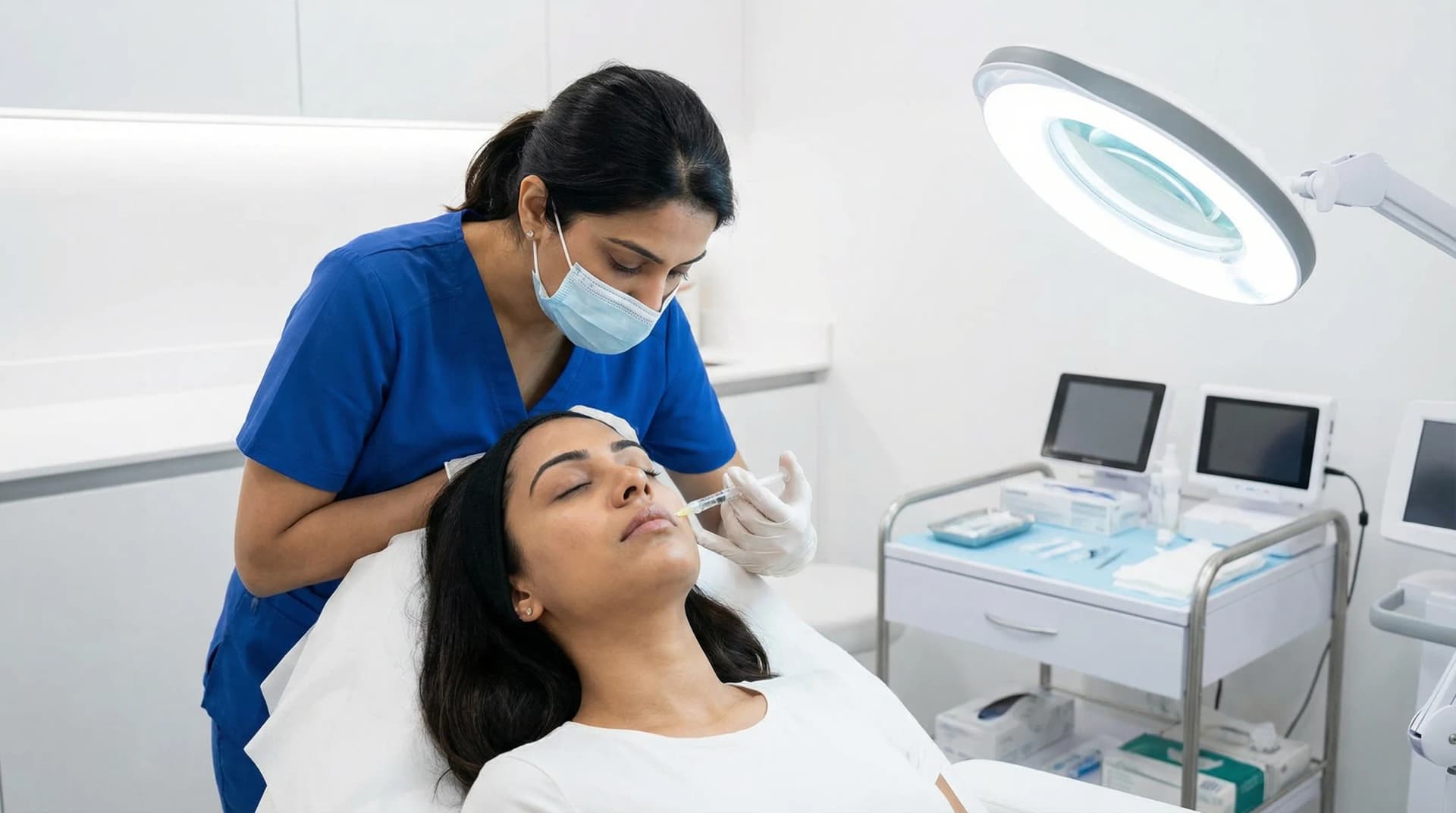
Treatment takes 20-40 minutes. According to JCCP standards, after thorough skin cleansing, numbing cream is typically applied for 15-20 minutes to ensure comfort. Your practitioner will discuss your desired outcome and may mark injection points. They'll inject small amounts of filler, carefully moulding as they work. You'll see results immediately, though Save Face advises that initial swelling will temporarily exaggerate them.
Recovery
The NHS notes you should expect swelling for 24-72 hours—this is completely normal and will settle. Bruising is common at injection sites and may last up to a week. According to Save Face aftercare guidance, avoid kissing, drinking through straws, and vigorous exercise for 24 hours. Skip alcohol the day before and after treatment to minimise bruising. Don't massage your lips unless specifically advised. Most social activities can resume after 2-3 days once swelling subsides.
Results
According to NHS information, initial results are visible immediately, but final results appear once swelling resolves at around 2 weeks. Lips will look natural and proportionate when assessed by your practitioner. Results typically last 6-12 months, with the NHS noting that lips often metabolise filler faster than other facial areas due to their mobility and blood supply. Maintenance treatments sustain your enhancement.
Safety considerations
The NHS strongly advises choosing a medically qualified practitioner registered with a professional body (GMC, GDC, NMC, GPhC). Save Face emphasises that hyaluronic acid fillers are considered the safest option because they're reversible with hyaluronidase. The JCCP mandates that all practitioners must stock this emergency medication and be trained to recognise and manage vascular occlusion—a rare but serious complication requiring immediate treatment. Avoid treatment during pregnancy, breastfeeding, or if you have active cold sores (herpes simplex). Always verify your practitioner is on an accredited register such as Save Face.
Questions to ask your practitioner
Before booking your treatment, make sure your practitioner can answer these questions:
- 1What are your qualifications for administering lip fillers, and where are you registered?
- 2Which hyaluronic acid product do you recommend for my lips, and why?
- 3Do you carry hyaluronidase and know how to manage vascular emergencies? (JCCP requirement)
- 4How much filler do you recommend for natural-looking results on my first treatment?
- 5Can I see before-and-after photos of your lip filler work on similar patients?
- 6What happens if I'm not happy with the results?
Frequently asked questions
How much lip filler should I get?
According to Save Face, for first-time patients practitioners typically recommend 0.5-1ml for subtle, natural enhancement. You can always add more at a follow-up appointment once you've seen how your lips respond. Starting conservatively ensures you're happy with the result and maintains natural proportions with your facial features.
Do lip fillers hurt?
According to NHS guidance, discomfort is usually minimal with proper numbing. Most practitioners apply topical anaesthetic cream, and many HA fillers contain lidocaine (local anaesthetic) within the gel itself. You'll feel pressure and mild pinching. Lips are sensitive, but the procedure is well-tolerated by most people.
Can lip fillers look natural?
Absolutely. Save Face emphasises that natural-looking results depend on the practitioner's skill and appropriate filler volume. Subtle enhancement that respects your natural lip shape and facial proportions looks beautiful and balanced. Communicate your preference for a natural outcome clearly during your consultation—most complications with appearance result from over-filling.
What if I don't like my lip fillers?
According to NHS guidance, hyaluronic acid fillers can be dissolved using hyaluronidase, an enzyme that breaks down the HA. This reversibility is one of the key safety advantages of these products. However, the JCCP notes that dissolution should be reserved for genuine dissatisfaction or medical complications, not minor concerns that typically settle naturally as swelling resolves.
Sources
- • NHS - Dermal fillers guidance
- • Save Face - Government-approved practitioner register
- • JCCP - Joint Council for Cosmetic Practitioners standards
Last reviewed: 1 May 2026
Find Lip Fillers clinics
Compare verified clinics offering lip fillers near you.
74 UK locations:
Related treatments
Injectables
Your safety matters
All clinics on SkinSage are verified. We encourage you to research practitioners thoroughly before booking any treatment.