
Laser Hair Removal
Achieve long-lasting hair reduction with targeted light technology
What is Laser Hair Removal?
Laser hair removal uses concentrated light beams to target and destroy hair follicles, significantly reducing hair growth over time. According to NHS guidance, the laser energy is absorbed by melanin (pigment) in the hair, converting to heat that damages the follicle's ability to produce new hair. The JCCP classifies laser and IPL hair removal under their standards, noting that treatment protocols must be produced or approved by an Expert Registered Healthcare Professional (ERHP) or Expert Medical Practitioner (EMP). It's one of the most effective methods for long-term hair reduction, though multiple sessions are required.
Who is it for?
Laser hair removal suits adults wanting a long-term solution to unwanted body or facial hair. According to the BAD, the treatment is most effective on darker hair against lighter skin due to the contrast allowing better melanin targeting. However, advances in technology—particularly Nd:YAG lasers—now allow safer treatment of darker skin tones (Fitzpatrick types IV-VI) when performed by experienced practitioners with appropriate equipment. The NHS notes it's popular among those tired of constant shaving, waxing, or managing ingrown hairs.
Common concerns addressed:
- Unwanted facial hair
- Body hair (legs, arms, underarms)
- Bikini line and intimate areas
- Back and chest hair
- Ingrown hair problems (pseudofolliculitis)
- Time spent on regular hair removal methods

How does it work?
According to NHS information, the laser emits light at a specific wavelength that's selectively absorbed by melanin in hair follicles. This light energy converts to heat, damaging the follicle and inhibiting future growth. The BAD explains that treatment only affects hair in the active growth phase (anagen), which is why multiple sessions are required—each treatment targets a different proportion of hairs as they cycle into this phase. Over a course of treatments, you'll see progressive, permanent reduction in hair density.
What to expect
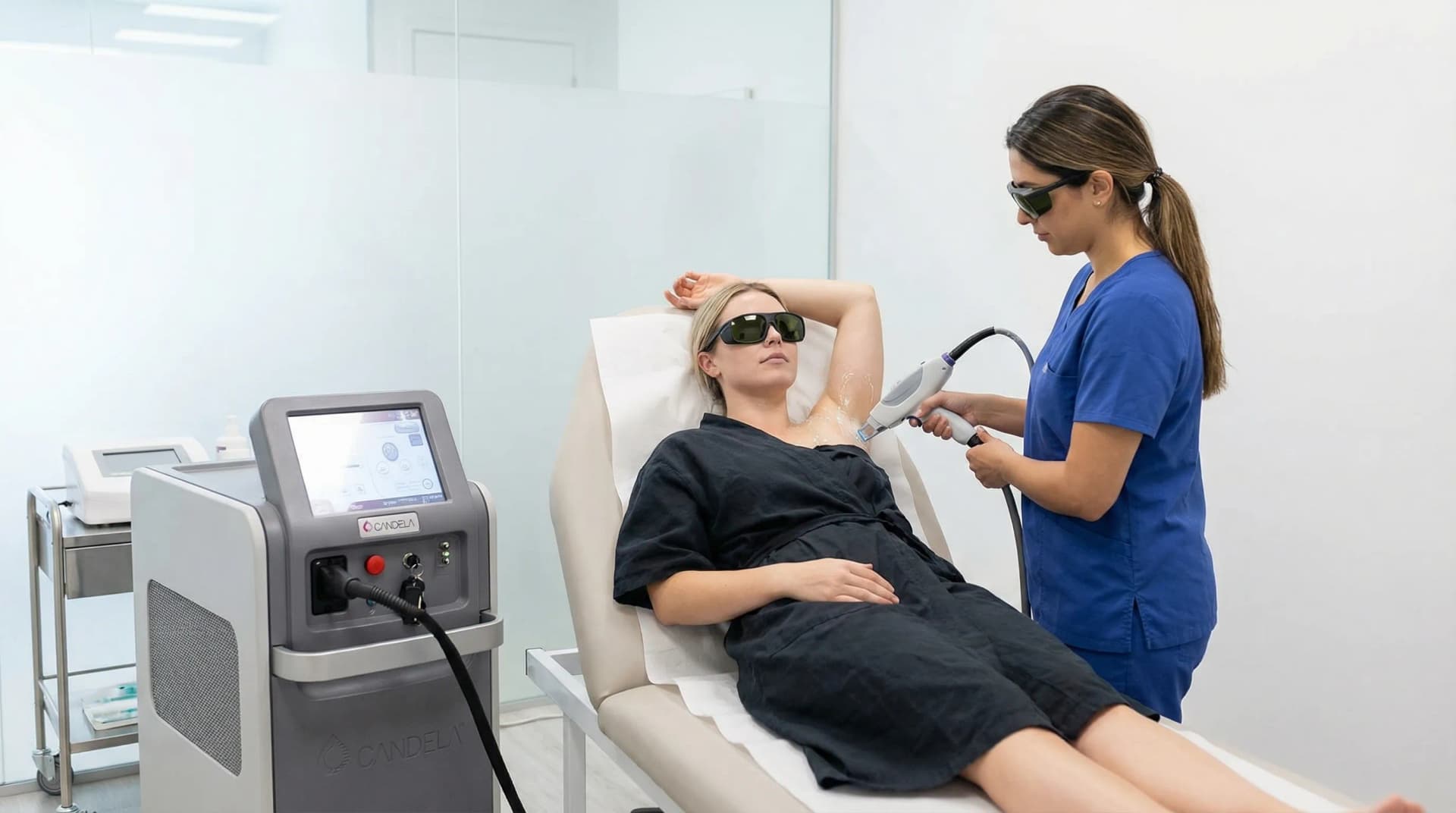
The procedure
According to JCCP protocols, you'll wear protective eyewear throughout treatment. The practitioner holds a handheld device against your skin, delivering pulses of laser light. Many describe the sensation as similar to an elastic band snapping against the skin. Modern lasers incorporate cooling systems to manage discomfort. The BAD notes session length varies significantly—underarms take approximately 15 minutes, while full legs may require an hour.
Recovery
The NHS advises that treated areas may appear red and slightly swollen, like mild sunburn, for a few hours to a couple of days. Cool compresses and aloe vera gel can soothe the skin. The JCCP mandates avoiding sun exposure and tanning (including fake tan) for at least 2 weeks before and after each treatment, as tanned skin increases burn risk. Skip hot baths, saunas, and vigorous exercise for 24-48 hours. Treated hairs will shed naturally over 1-3 weeks.
Results
According to BAD clinical guidance, you'll notice hair shedding within 1-3 weeks of each session. Most people require 6-8 sessions, spaced 4-8 weeks apart depending on the body area and hair growth cycle. Results vary between individuals, but most achieve 70-90% permanent hair reduction. The NHS notes some patients may need occasional maintenance sessions, particularly if hormonal conditions affect hair growth.
Safety considerations
The JCCP requires that laser hair removal be performed by trained practitioners using equipment appropriate for the patient's skin type, with protocols approved by an ERHP or EMP. According to NHS guidance, treatment should be avoided on tanned, sunburnt, or recently fake-tanned skin, as this significantly increases burn and pigmentation risks. Inform your practitioner of any medications causing photosensitivity. The BAD advises that those with darker skin need practitioners experienced with appropriate laser types (Nd:YAG) to minimise pigmentation complications. Treatment is not recommended during pregnancy. Very light, grey, red, or white hair lacks sufficient melanin for effective treatment.
Questions to ask your practitioner
Before booking your treatment, make sure your practitioner can answer these questions:
- 1What type of laser do you use, and is it appropriate for my skin tone? (Nd:YAG for darker skin)
- 2How many sessions will I likely need for this body area?
- 3What qualifications do you hold, and who has approved your treatment protocols? (JCCP standard)
- 4What preparation do I need before each session?
- 5How do you handle potential side effects such as burns or pigmentation changes?
- 6What results can I realistically expect given my hair colour and skin type?
Frequently asked questions
Does laser hair removal work on all skin types?
According to the BAD, modern laser technology—particularly Nd:YAG lasers—can safely treat most skin tones when used by experienced practitioners. However, very light, grey, red, or white hair lacks sufficient melanin to absorb the laser energy effectively. Dark hair on any skin tone typically responds best. A consultation will determine the most suitable approach for your specific combination.
Is laser hair removal permanent?
The NHS describes laser hair removal as providing permanent hair reduction, not complete permanent removal. Most people achieve 70-90% reduction after a full course of treatment. Some fine hairs may regrow over time, and hormonal changes (pregnancy, menopause, PCOS) can stimulate new growth. Occasional maintenance sessions help keep results optimal.
How should I prepare for laser hair removal?
According to JCCP guidance, shave the treatment area 24-48 hours before your appointment—the hair shaft must be present in the follicle but not above the skin. Avoid waxing, plucking, threading, or epilating for 4-6 weeks beforehand, as these methods remove the hair root the laser needs to target. Stay out of the sun and avoid fake tan for 2 weeks before treatment.
Can I have laser hair removal on my face?
Yes. The BAD confirms facial laser hair removal is very effective for areas like the upper lip, chin, and sideburns. Facial hair often requires more sessions than body hair due to hormonal influences on growth cycles. Ensure your practitioner has specific experience with facial treatments, as the face requires particular care regarding settings and technique.
Sources
- • NHS - Laser hair removal guidance
- • BAD - British Association of Dermatologists
- • JCCP - Joint Council for Cosmetic Practitioners laser standards
Last reviewed: 1 May 2026
Find Laser Hair Removal clinics
Compare verified clinics offering laser hair removal near you.
74 UK locations:
Related treatments
Skin Resurfacing
Your safety matters
All clinics on SkinSage are verified. We encourage you to research practitioners thoroughly before booking any treatment.